What If the Developer Stops Building? Abandoned Housing Projects Explained
Skip to "On this page"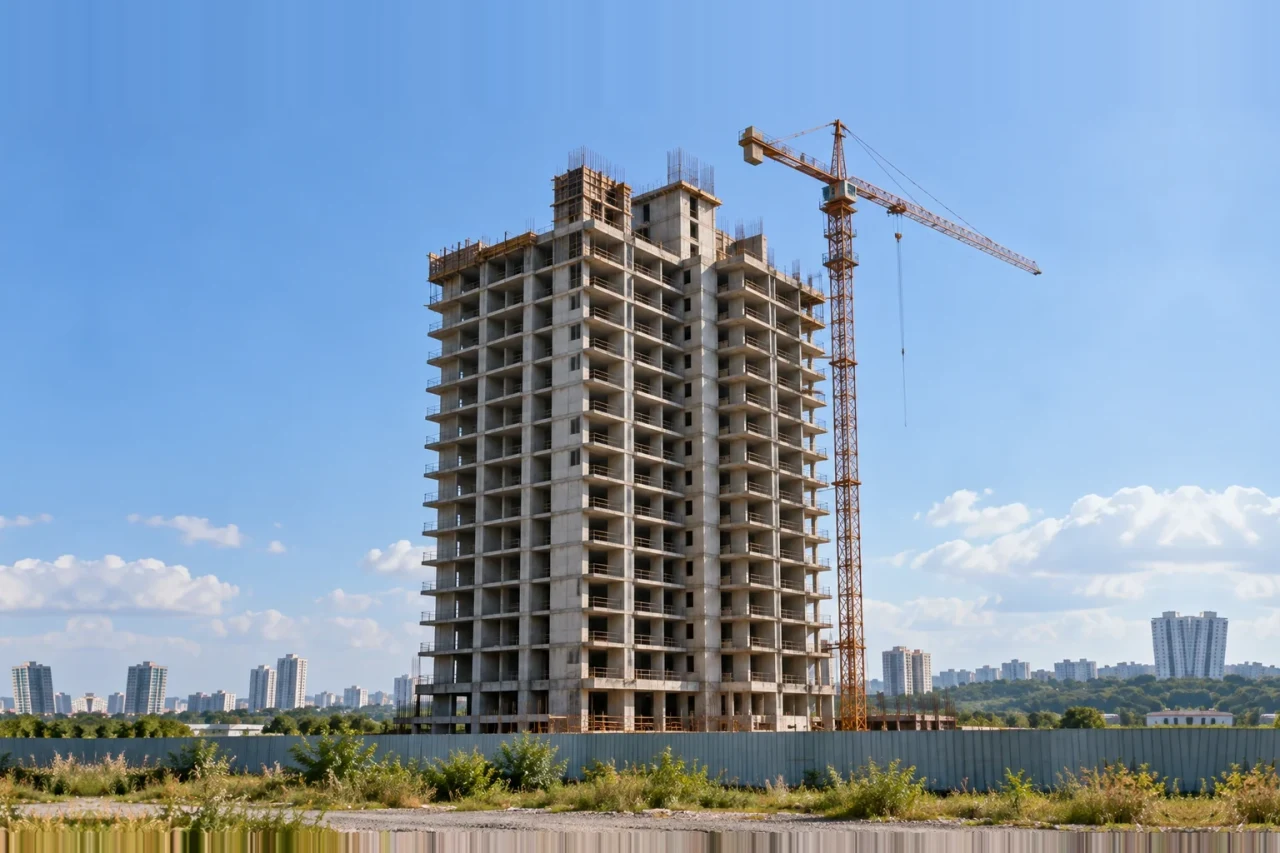
On this page
KPKT (the Ministry of Local Government Development) counts a project as abandoned when it is not completed and its site has had no significant activity for 6 months in a row, and the Minister certifies that status. If the developer company is then wound up (closed down), the money in the project’s Housing Development Account does not count as the developer’s own property. And if you signed after 1 June 2015, section 8A of the law lets you end the deal and get back the money the developer received from you, once three conditions are met.
This guide follows the HDA, the Housing Development (Control and Licensing) Act 1966 (see our HDA guide). The Act covers Peninsular Malaysia. We did not check the rules in Sabah and Sarawak.
What counts as abandoned
KPKT’s housing department (Jabatan Perumahan Negara) defines an abandoned project as one that is not completed, within or outside the period in the sale and purchase agreement, with no significant activity at the construction site for 6 months continuously. It splits them into two groups:
- Within the period: work progress has stopped for a continuous 6 months or more.
- Outside the period: the developer failed to complete the project within the time in the sale and purchase agreement.
The Minister certifies the status under section 11(1)(ca) of the Act.
In KPKT’s media release of 26 March 2025, its task force was tracking 116 abandoned private housing projects as at 28 February 2025. Three projects were certified abandoned in January 2025, in Selangor, Terengganu and Pahang.
What protects the money you paid
You pay by building stage. Under Schedule H, the sale agreement form for strata homes (a building split into separately owned units, such as condos), you pay 10% when you sign. Each building-stage payment after that is due within 30 days after you receive the developer’s written notice that the stage is done.
Our own example, not an official one. You buy a RM600,000 condo under Schedule H. The developer bills each stage up to the walls with their door and window frames in place (stage 2(c)), you pay, and then work stops.
- Paid by then: 10% on signing + 10% below-ground works + 15% concrete frame + 10% walls = 45%
- 45% × RM600,000 = RM270,000 paid
- Not yet due: 55% × RM600,000 = RM330,000
Your money sits in a separate account. The Act makes the developer open a Housing Development Account for each project, or for each phase, and pay buyers’ purchase money into it. The developer may not take money out except as the regulations allow.
If the developer company is wound up. If the developer company goes into liquidation (is wound up), voluntary or compulsory, the money in that account and the money held by the stakeholder (the lawyer holding buyers’ money for payment to the developer) does not count as the developer’s own property. It passes to the liquidator (the person who winds up the company), to be used only for the purposes the regulations allow money to be taken out of the account for. Only what is left after the developer’s duties under all the sale agreements are fully met is treated as the developer’s money.
The account can be frozen. If the Controller of Housing (Pengawal Perumahan) has reason to believe the developer is running its business in a way that harms buyers, or is breaking the Act, the Controller may order the account frozen. The bank then lets no money out unless the order is lifted or changed, or the Controller’s conditions allow it.
Ending the deal: section 8A
Section 8A of the Act lets you end your sale and purchase agreement at any time if all three of these are true:
- The developer “refuses to carry out or delays or suspends or ceases work for a continuous period of six months or more after the execution of the sale and purchase agreement”.
- You have the written consent of your end financier (the bank that gives your home loan). The Act says the bank may not unreasonably withhold it.
- The Controller has certified that the developer stopped work in that way.
The developer must then refund all the money it received from you, free of any interest, within 30 days.
Check your signing date. Section 8A covers only agreements signed after Act A1415 came into force on 1 June 2015.
What the government can do
When the developer itself tells the Controller, or the Controller is of the opinion, that the developer is unable to meet its duties to buyers, is about to suspend building, or is running its business in a way that harms buyers, the Minister may:
- (a) direct the developer to take the steps the Minister considers necessary to put things right
- (b) appoint a person to advise the developer in running its business
- (c) direct a company to take control and carry on the developer’s business
- (ca) certify that the developer has abandoned the project
- (d) direct the developer to ask the High Court to wind up its business
- (e) take any other action needed to carry out the Act
These directions bind the developer and the buyers. For steps (a), (b), (c) and (e), the Minister may order that the costs reasonably incurred in carrying them out be paid from the project’s Housing Development Account.
Buyers can also ask the Minister to have the developer investigated. The application must be supported by at least five buyers. It must come with whatever evidence and security the Minister requires, so the Minister is satisfied it is made in good faith, and to pay the costs of the investigation.
How KPKT rescues abandoned projects
Among the rescue methods KPKT named in its March 2023 release are getting the project completed until it receives a CCC (Certificate of Completion and Compliance), settling with buyers, and changing the development.
A rescue does not always mean a finished home. KPKT’s list of abandoned projects it settled from 2009 to 2025 includes statuses such as a return of deposit, and a change of the plan from housing to commercial.
Your home loan and EPF
We found no official source that says your loan instalments stop, or that they go on.
What KPKT’s FAQ does say: its letter confirming a project is abandoned (Surat Pengesahan Projek Terbengkalai) can help you get consideration for:
- asking your lender to cut the interest rate and restructure your loan repayments
- a second EPF (KWSP) withdrawal to buy another home (see our EPF withdrawal guide)
- with LPPSA (the public sector home financing board): cancelling the loan and applying for a new full loan, or putting off the 4% loan interest while the project is rescued or for 5 years, whichever ends first. You apply to LPPSA in writing.
Consideration means the lender or agency decides. The FAQ does not say they must agree.
To get the letter, KPKT says to check first that your project’s name is on its ehome site. If it is, apply by email to pa_ppt@kpkt.gov.my, by fax to 03-8891 4228 or by post, with one copy of your identity card and one copy of your sale and purchase agreement. If it is not listed, check with JPN’s private project monitoring division (Bahagian Pemantauan Projek Swasta).
Claims, time limits and late-delivery damages
Six years. KPKT’s FAQ says that, based on the Limitation Act 1953, a sale and purchase agreement is valid for up to six years from the date it was signed. It advises buyers to claim against the developer by registered letter, or by filling in a Proof of Debt form (Borang Bukti Keberhutangan, the form for claiming what you are owed), which you can get from the Malaysian Department of Insolvency, before that time runs out.
Not the tribunal. KPKT lists abandoned projects among the claims outside the Tribunal for Homebuyer Claims (see our tribunal guide). The Act lets you sue the developer in court in your own name over any matter arising out of your sale and purchase agreement, as long as you tell your home loan financier in writing before you file or within 14 days after.
LAD. Under the agreement forms, LAD (fixed damages for late delivery) is 10% a year on the price, counted day by day from the end of the delivery period (36 months from the agreement date for a strata home, 24 months for a landed home) until you take vacant possession (when the developer hands you the empty home; see our getting your keys guide). We found no official source on what happens to LAD if that day never comes.
Where to report. KPKT’s FAQ lists its Sistem Aduan Bersepadu (complaints system), email pa_ppt@kpkt.gov.my, fax 03-8891 4228, phone 03-8891 4243, or post to the Bahagian Projek Perumahan Terbengkalai, KPKT, Aras 33, Blok 51, Persiaran Perdana, Presint 4, 62100 Putrajaya.
What happens to the developer
Under the Act’s text as at 2 March 2016, abandoning a project, or any phase of it, is an offence. On conviction, the developer faces a fine of not less than RM250,000, or jail of up to three years, or both.
When a developer commits an offence under the Act, the people running it, including its directors, managers and secretaries, are treated as guilty too, unless they prove it happened without their consent or connivance (secretly going along with it) and that they took all due care to stop it. On conviction, they face jail of 12 months to three years, and a fine of RM50,000 to RM250,000.
A person who was a director of a developer wound up by a court cannot act as a director of any licensed developer without the Minister’s written approval. KPKT’s FAQ on sick projects also lists an abandoned project as one of the reasons a developer is blacklisted.
What to check before you buy
- At the sales gallery, look for the developer’s licence and its advertisement and sale permit. The Act makes a licensed developer display copies at every office and every place where it sells homes, with its last audited balance sheet and the details of the people who control it.
- Check that each payment notice matches a stage that is done on site.
- Note your signing date. Section 8A can only help you if you signed after 1 June 2015.
- Keep copies of your sale and purchase agreement and your identity card. KPKT asks for both.
- Ask your bank, before you sign the loan, how it treats a project that stops.
This is a general guide, not legal or financial advice, and rules and sale agreement terms can change. Check your own agreement with your lawyer.
Frequently Asked Questions
When does KPKT count a project as abandoned?
KPKT's definition is a project that is not completed, within or outside the period in the sale and purchase agreement, with no significant activity at the construction site for 6 months continuously. The Minister certifies the status under section 11(1)(ca) of the Housing Development (Control and Licensing) Act 1966.
Can I end my sale agreement and get my money back?
Under section 8A of the Act, yes, if all three conditions are met: the developer has refused to carry out, delayed, suspended or ceased work for a continuous period of six months or more after the agreement was signed; your end financier (the bank that gives your home loan) has given its written consent; and the Controller of Housing has certified that stop. The developer must then refund all the money it received from you, free of any interest, within 30 days. The right covers only agreements signed after Act A1415 came into force on 1 June 2015.
Do I still have to pay my home loan?
We found no official source that says your instalments stop, or that they go on. KPKT's FAQ says its letter confirming a project is abandoned can help you get consideration when you ask your lender to cut the interest rate and restructure your repayments. The FAQ does not say the lender must agree, so talk to your lender.
Can I take an abandoned project to the Tribunal for Homebuyer Claims?
No. KPKT lists abandoned projects among the claims the tribunal cannot hear. The Act lets you sue the developer in court in your own name over any matter arising out of your sale and purchase agreement, as long as you tell your home loan financier in writing before you file or within 14 days after.
How do I get KPKT's letter confirming my project is abandoned?
KPKT's FAQ says to check first whether your project's name is on its ehome site. If it is, apply by email to pa_ppt@kpkt.gov.my, by fax to 03-8891 4228 or by post, with one copy of your identity card and one copy of your sale and purchase agreement.
Official sources (9)
- Housing Development (Control and Licensing) Act 1966, Act 118 (updated text as at 2 March 2016) (opens in a new tab)
- KPKT / Jabatan Perumahan Negara, Bahagian Pemulihan Projek Terbengkalai (definition of an abandoned project) (opens in a new tab)
- KPKT / Jabatan Perumahan Negara, Soalan Lazim Mengenai Perumahan Terbengkalai (FAQ on abandoned housing) (opens in a new tab)
- KPKT / Jabatan Perumahan Negara, Soalan Lazim Laporan 7F dan Projek Sakit (FAQ on sick projects) (opens in a new tab)
- Housing Development (Control and Licensing) (Amendment) Regulations 2015, Schedules G and H (official Malay text, PKNS copy) (opens in a new tab)
- KPKT media release, 26 March 2025, on sick and abandoned private housing projects (opens in a new tab)
- KPKT media release, 28 March 2023, status of late, sick and abandoned housing projects (opens in a new tab)
- JPN, KPKT, list of abandoned private housing projects settled, 2009 to 2025 (opens in a new tab)
- KPKT, Tribunal for Homebuyer Claims, frequently asked questions (opens in a new tab)
See real projects and prices
Browse projects →