Condo parcel lockers and old letter boxes: the parcel numbers, the law and who pays
Skip to "On this page"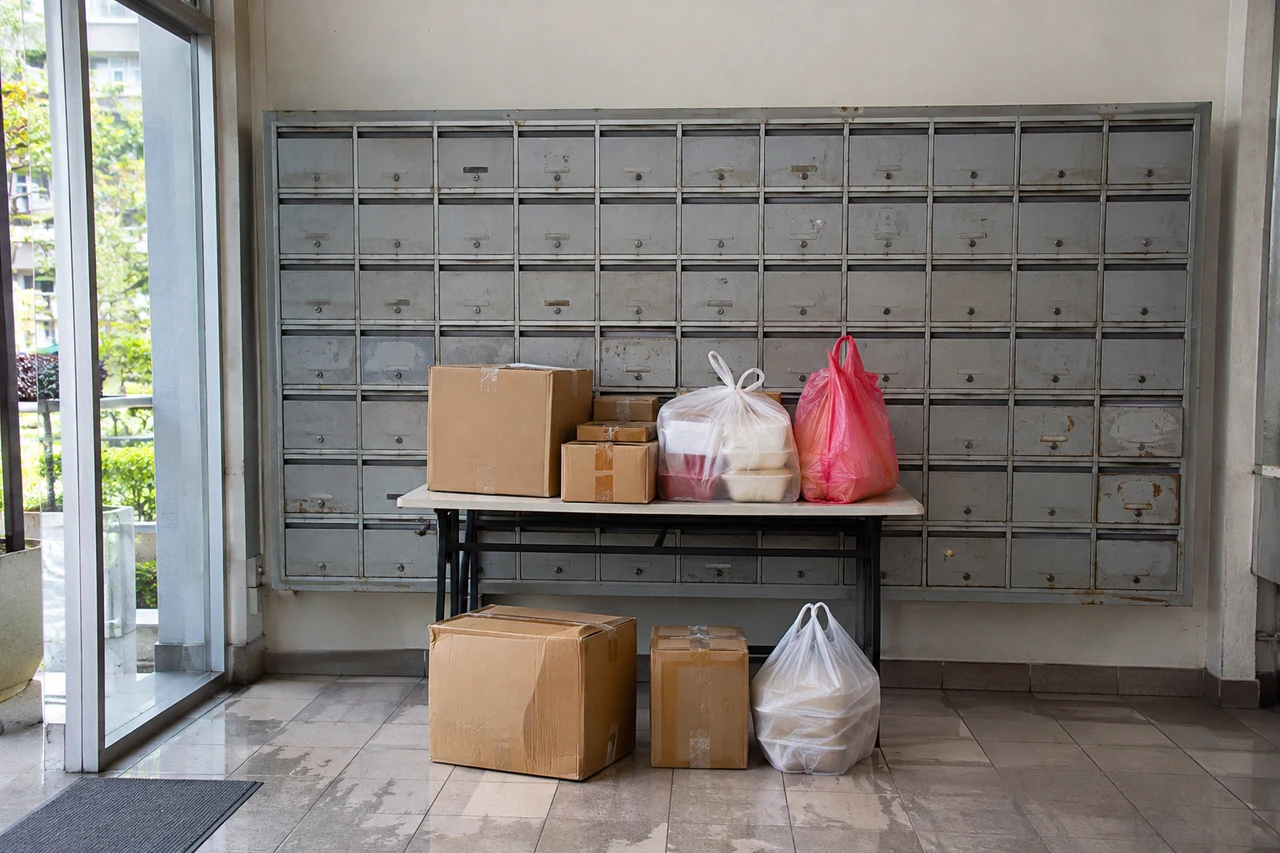
Businesses in Malaysia earned RM1,288.1 billion from online sales in 2024, up 8.8% from RM1,184.1 billion the year before, according to DOSM (the Department of Statistics Malaysia).
From October to December 2025, couriers moved 434,791,300 parcels within Malaysia, according to MCMC. In those same 3 months, 57,565,100 pieces of letter mail went out within Malaysia. That’s about 7.6 parcels for every piece of letter mail.
The parcel count was 25.4% higher than a year earlier.
Letter mail was already falling, from 596,529,700 pieces within Malaysia in 2019 to 456,868,000 in 2020, a 23.4% drop.
Letter boxes and the law
Under the Postal Services Act 2012, a letter box is a container a person sets up to receive mail sent to them or to their address. Nothing in the post law says a building must have letter boxes, though it lets MCMC make rules on letter boxes and how they are used.
For a licensed company, delivery means leaving an item at your address, in your letter box or another box made for your mail, or with you or someone treated as allowed to receive it.
If parcels keep piling up downstairs, it may be worth asking management where couriers are meant to leave them.
Food orders
The Food Hygiene Regulations 2009 say anyone carrying food must use a clean vehicle that can hold the right temperature.
Who pays for shared parts
In Peninsular Malaysia and Labuan, a condo’s shared parts, called common property, are run by the JMB or MC, under the Strata Management Act 2013. Either one must keep them in good repair, and may buy or hire movable property (things not fixed in place) for owners to use there.
Owners pay for all this through the maintenance fee and the sinking fund. The sinking fund (money saved for bigger jobs, such as repainting) must be at least 10% of the maintenance fee, and it can also pay for that movable property. If a parcel locker sounds useful, the owners’ meeting is a good place to raise it.
From vacant possession (the handover of a unit to its buyer) until one month after the JMB is set up, the developer sets the maintenance fee. The Commissioner can extend this time. The developer also pays the maintenance fee and sinking fund on units it hasn’t sold.
Frequently asked questions
Who keeps a food locker in a condo clean and the food safe?
Under the Strata Management Act 2013, which covers Peninsular Malaysia and Labuan, the JMB or MC must look after the shared parts of a condo, called common property, and keep them in good repair. On the way to the condo, the Food Hygiene Regulations 2009 say anyone who carries food must use a clean vehicle that can hold the right temperature (regulation 56).
Who pays for a parcel or food locker in a condo?
In Peninsular Malaysia and Labuan, owners pay for the shared parts of a condo through the maintenance fee (called Charges in the Strata Management Act 2013) and the sinking fund. The sinking fund must be at least 10% of the maintenance fee, and it may pay for movable property (things not fixed in place) for the shared parts. The developer pays both on units it has not sold.
Where can a courier leave parcels in a condo?
Under the Postal Services Act 2012, a licensed company delivers an item when it leaves it at the address, puts it in a letter box or another box or device made for the person's mail, or hands it to the person, their agent, or someone treated as allowed to receive it.
Does a condo have to have letter boxes?
No part of the Postal Services Act 2012 says a building must have letter boxes. The Act calls a letter box a container that a person provides to receive mail sent to them or to their address. Section 101 lets MCMC make rules on letter boxes and how they are used.
Official sources (7)
- MCMC, Postal & Courier Pocket Book of Statistics, 4Q 2025 (opens in a new tab)
- MCMC, Postal & Courier Pocket Book of Statistics, 4Q 2024 (opens in a new tab)
- MCMC, Postal and Courier Services: Facts & Figures 2020 (opens in a new tab)
- DOSM, Usage of ICT and E-Commerce by Establishment (reference year 2024) (opens in a new tab)
- Postal Services Act 2012 (Act 741), reprint as at 1 May 2020, sections 2, 3, 30 and 101 (opens in a new tab)
- Ministry of Health, Food Hygiene Regulations 2009, regulation 56 (opens in a new tab)
- Strata Management Act 2013 (Act 757), sections 1, 2, 7, 9, 12, 21, 24, 25, 59 and 61 (opens in a new tab)